
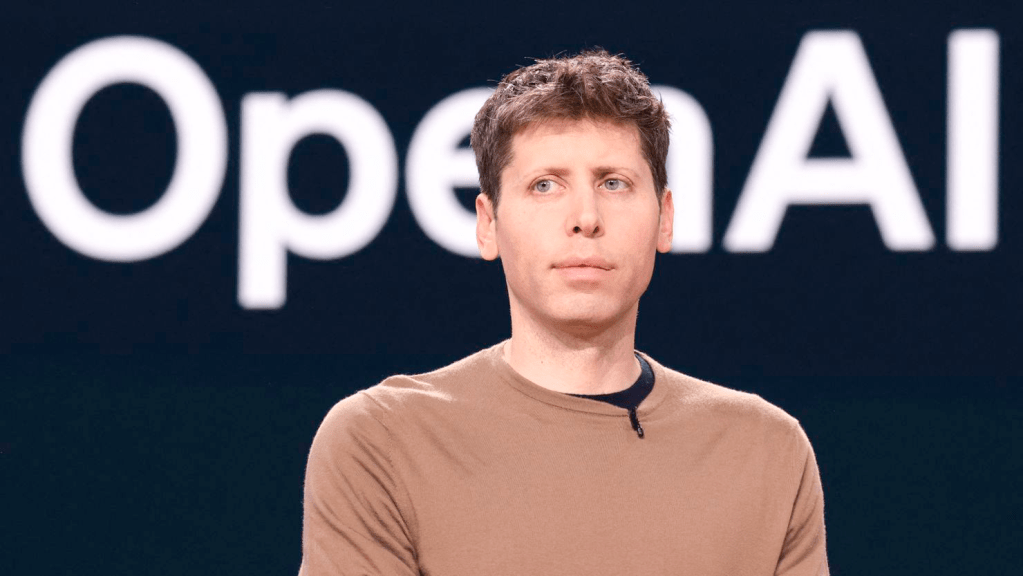
OpenAI, the secretive artificial intelligence company behind ChatGPT, has long pursued the development of artificial general intelligence (AGI)—a theoretical form of AI that matches human cognitive abilities. But in her new book, Empire of AI: Dreams and Nightmares, and Sam Altman’s OpenAI, investigative journalist Karen Hao offers a critical examination of the company’s trajectory, arguing that its ambitions may come at a profound cost to society.
Hao, who was the first journalist to profile OpenAI in 2019, witnessed the company’s early shift from a nonprofit research lab to a commercial entity backed by a $1 billion investment from Microsoft. Despite OpenAI’s stated mission to develop AI for the public good, Hao found a culture of intense competition and secrecy—far from the open, collaborative ethos it originally promoted.
Sam Altman’s Influence and the “Growth at All Costs” Mentality
Central to Hao’s critique is OpenAI CEO Sam Altman, whose leadership she describes as emblematic of Silicon Valley’s “growth at all costs” philosophy. Under Altman, OpenAI has pursued an aggressive approach to AI development, training massive models on vast swaths of internet data, consuming enormous energy resources, and relying on extensive human labor for data refinement.
“OpenAI is a manifestation of Altman,” Hao said in an interview. “He operates with a zero-sum mentality, framing AI development as a race where the U.S. must win—or China will.” This rhetoric, she argues, justifies the company’s consolidation of power while obscuring the broader societal risks.
The Real Threat: Power Consolidation, Not Rogue AI
While some AI doomers warn of superintelligent machines turning against humanity, Hao sees a more immediate danger: the unchecked accumulation of economic and political influence by a handful of tech giants.
“These companies are becoming new forms of empire,” she said. “They monopolize knowledge production, exploit labor, and consume historic levels of resources—all while claiming they must dominate to prevent others from doing so.”
The consequences, Hao warns, could include mass job displacement, environmental strain, and a loss of democratic agency as decisions about AI’s role in society are made by a small elite.
Is There a Better Path for AI?
Hao acknowledges that AI—when applied to narrow, well-defined problems—can yield significant benefits, such as improving medical diagnostics or optimizing renewable energy grids. But the pursuit of AGI, she argues, is a misdirection, creating confusion about AI’s capabilities while demanding unsustainable resources.
“We don’t need an ‘everything machine’ that can’t actually do everything,” she said. “We need diverse, accessible AI tools that serve real needs—not just corporate ambitions.”
OpenAI declined to comment for this story.
Empire of AI is available now.





 AI News Monitor
Leave a comment