
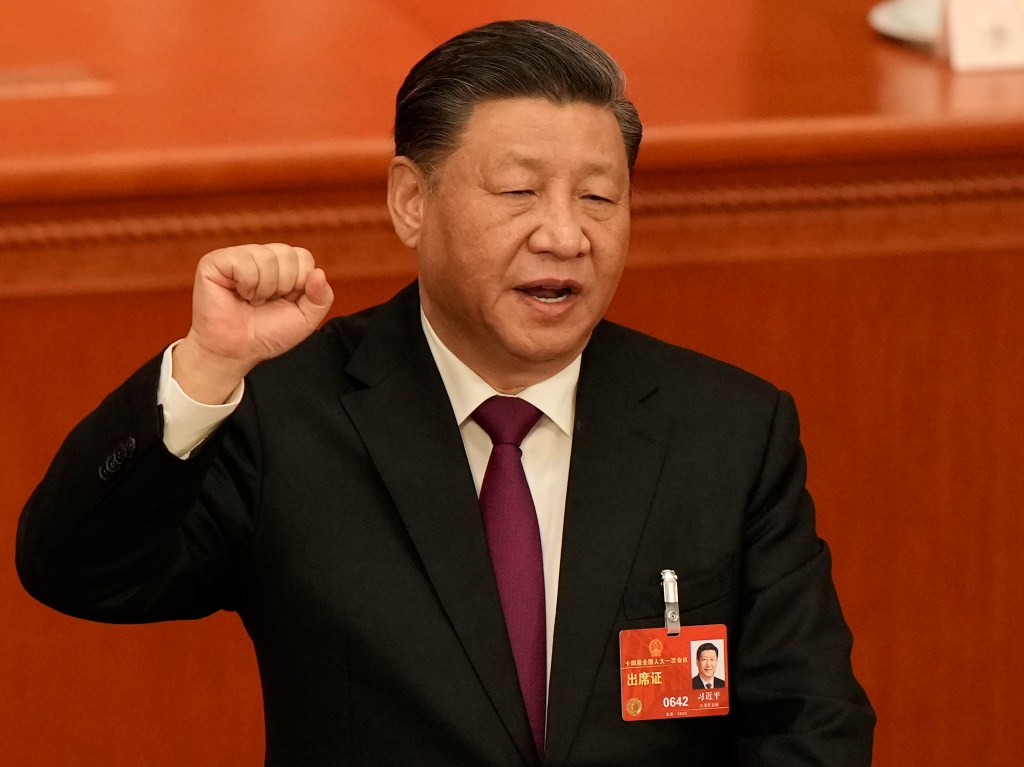
President Xi Jinping has called for a major push toward self-reliance in artificial intelligence (AI) development, as China continues its intense competition with the United States in one of the world’s most strategic technology sectors.
Speaking during a Politburo study session on Friday, Xi emphasized the need to leverage China’s “new whole national system” to accelerate AI innovation and close the technological gap with the U.S., according to state media reports published Saturday.
“We must recognize the gaps and redouble our efforts to comprehensively advance technological innovation, industrial development, and AI-empowered applications,” Xi said, according to the Xinhua news agency. He pledged increased policy support, including enhanced government procurement, stronger intellectual property protections, expanded research initiatives, and greater efforts to cultivate AI talent.
China has made notable progress in AI over the past year, with some experts suggesting it has narrowed its technological gap with the United States. In January, Chinese AI startup DeepSeek attracted global attention by launching an AI reasoning model trained on less advanced chips and developed more cheaply than its Western counterparts — a move seen as challenging the narrative that U.S. sanctions were stalling China’s AI sector.
The DeepSeek development also marked significant strides in China’s capabilities in infrastructure software engineering, further boosting confidence in the country’s ability to weather technological restrictions imposed by Washington.
In his remarks, Xi stressed the need for China to focus on mastering “core technologies” such as high-end chips and basic software, and to build an independent, controllable, and collaborative AI ecosystem. “We must continue to strengthen basic research,” he said, emphasizing the urgency of developing a robust and secure foundation for future AI growth.
Xi also underscored the importance of AI governance, calling for the rapid establishment of regulations, laws, and emergency response systems to ensure that AI technology remains “safe, reliable, and controllable.”
Last year, Xi warned that AI should not become a “game of rich countries and the wealthy,” and he again urged for broader international cooperation and governance frameworks to manage the global impacts of AI technologies.
As the rivalry with the U.S. deepens, China’s renewed focus on AI self-sufficiency signals that technological innovation will remain at the heart of its strategic ambitions.





Leave a Reply