
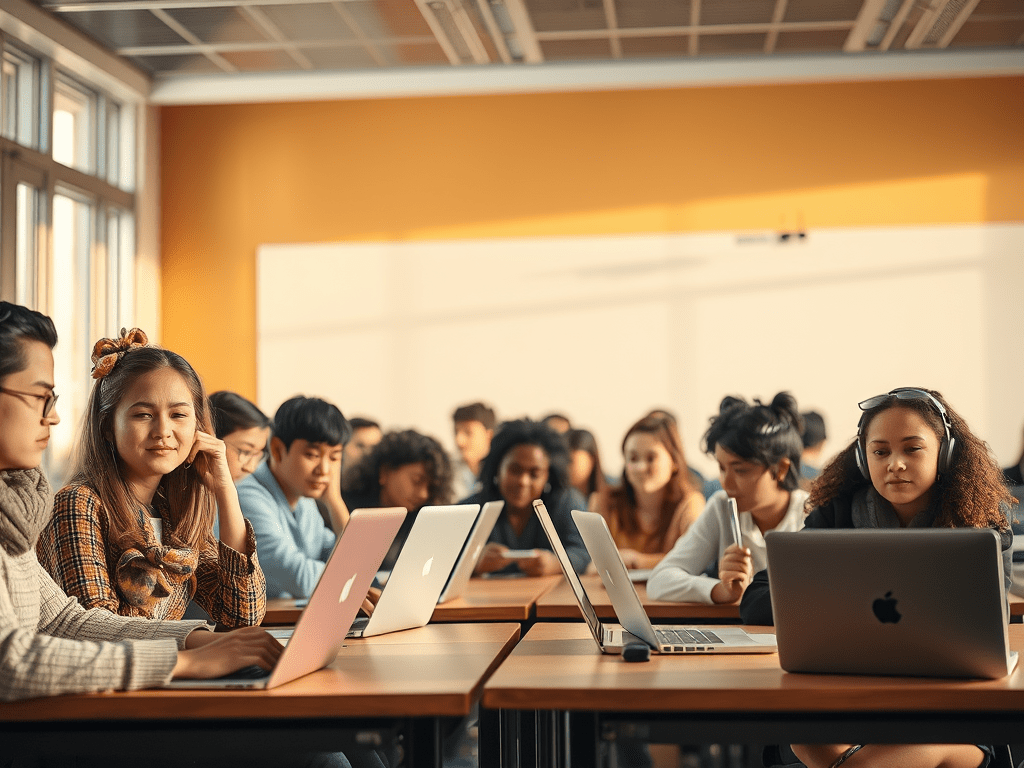
The education vice-president at OpenAI says there must be equal access to AI training, or a gulf could open in society
The GM education at OpenAI, Leah Belsky, has warned that AI literacy holds the possibility of increasing inequalities in society. In an interview with Financial Times on the role of AI in education, the former Chief Revenue Officer at Coursera said that AI could “advance educational outcomes,” but could also create a literacy divide.
With the democratization of generative AI technologies like chatbots, powerful informational tools are now widely available to users. These tools are being adopted in both professional and academic settings. In workplaces, many employees are turning to AI for upskilling and reskilling. In classrooms, the technology has also become extremely popular. A survey of over 1000 high school students across the US showed that more than 70 percent were using ChatGPT to assist them with schoolwork.
However, there have also been some cases of schools banning AI, which Leah Belsky believes could create a serious imbalance. Even in cases where AI use is permitted, there might be a significant difference in skill of use, and the OpenAI exec warns that this difference cannot be ignored.
“AI could exacerbate inequalities if only some people know how to use it powerfully while others don’t,” says Belsky. She believes that integrating AI into mainstream education is the only way to maintain a balance. Both students and faculty should actively learn the best way to put AI into use.
This comes after reports from Beijing revealed that China’s new education policy is to introduce AI to students from elementary school to tertiary level. The country plans to dominate the global tech sector by teaching AI courses and equipping its future workforce with AI-related skills. The US may need to deploy a similar comprehensive strategy to ensure that there is more balanced AI literacy.
AI is being increasingly adopted in the workplace. There, professionals have been warned that they need to learn critical AI skills or risk being made redundant. Switching to AI-inclusive education from high school and universities can help the future workforce to be better prepared for the ongoing labor transformation. Experts agree that AI has to be introduced in such a way as to encourage the development of AI literacy, but without negatively impacting the broader goals of learning.





Leave a Reply