
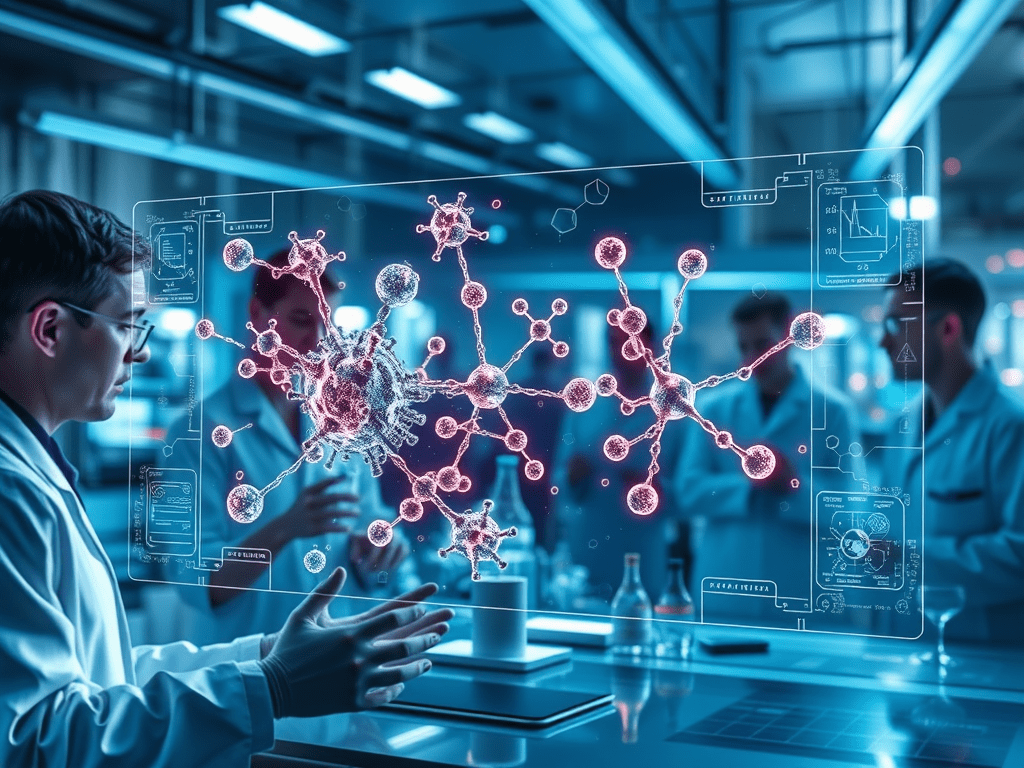
Scientists use artificial intelligence models to speed up the search for new infection-fighting drugs.
A team of Chinese researchers has developed a powerful AI model that can help fight treatment-resistant germs. The model uses generative AI to design new antimicrobial peptides, tiny proteins that help fight harmful bacteria and fungi.
Drug-resistant organisms are some of the most pressing problems in medical science. But peptides are a good solution. They are used in medicine to make it much harder for organisms to develop antibiotic resistance.
However, developing new antimicrobial peptides is difficult for experts because there are countless possible structures they can have. While AI can help speed up the search, AI models used so far mostly suggest structures similar to the ones they have seen before.
The new AI model developed by the Chinese team solves this problem. It can generate a much wider variety of new peptide structures than before, allowing scientists to quickly create and test many possible new infection-fighting compounds.
The Chinese research team conducted a sample study using the AI model to generate 600,000 peptide structures. They then tested 40 of the best ones in a lab. Out of those, 25 showed strong ability to kill bacteria and fungi, suggesting that AI-designed peptides could be a major step forward in fighting antibiotic resistance.
Experts see this as a big breakthrough for medical research in general. Finding and developing new drugs normally takes years and costs billions of dollars. But embracing AI speeds up the process by sifting through a ton of information that would be impossible to do manually.
Lead researcher Wenqiang Chang says that the value of the new AI model his team developed “lies in accelerating drug discovery and lowering development costs.”
Using artificial intelligence to explore advances in the development of drugs to fight bacteria is not a new thing. In 2023, researchers in the US and Canada used AI to discover potent antibiotics that can be used to treat some of the world’s toughest and deadliest bacteria. In 2024, they then went on to develop an AI model that can do this, releasing it for free last month.
However, the model developed by the Chinese team focuses on rapid and effective creation of antimicrobial peptides, which are described by experts as the promising and attractive way to fight drug-resistant germs.
More testing is still needed before these AI-designed peptides can be used as actual treatments. Scientists must make sure they are safe and effective in humans.
“An important next step is determining whether [the newly created peptide] or a derivative thereof is progressible as therapeutic,” says Jon Stokes, a chemical biologist from McMaster University. Even so, the work of the Chinese team shows how AI can aid drug discovery and help humans fight deadly infections. Amid talk of an AI arms race, deepfake issues, and deadly AI chatbots, innovations like this one give serious encouragement about what the future might hold.







Leave a Reply