
In a region long defined by oil and geopolitics, a new force is reshaping the contours of power: artificial intelligence.
During a sweeping Middle East tour last month, President Donald J. Trump announced over $2 trillion in investment commitments from Gulf states — including $600 billion from Saudi Arabia, $1.2 trillion from Qatar, and $200 billion from the United Arab Emirates — much of it aimed at solidifying a new axis of cooperation around cutting-edge U.S. technology and sovereign AI ambitions.
“The world is racing to build national AI platforms,” said Jensen Huang, chief executive of Nvidia, during the company’s earnings call last week. “Sovereign AI is a new growth engine.”
Indeed, while Washington seeks to dominate the global AI race and counter China’s technological rise, Gulf nations are offering what Silicon Valley needs most: cheap energy, abundant capital and, increasingly, a political environment eager to embrace Western tech hegemony.
A Geopolitical Shift from Crude to Compute
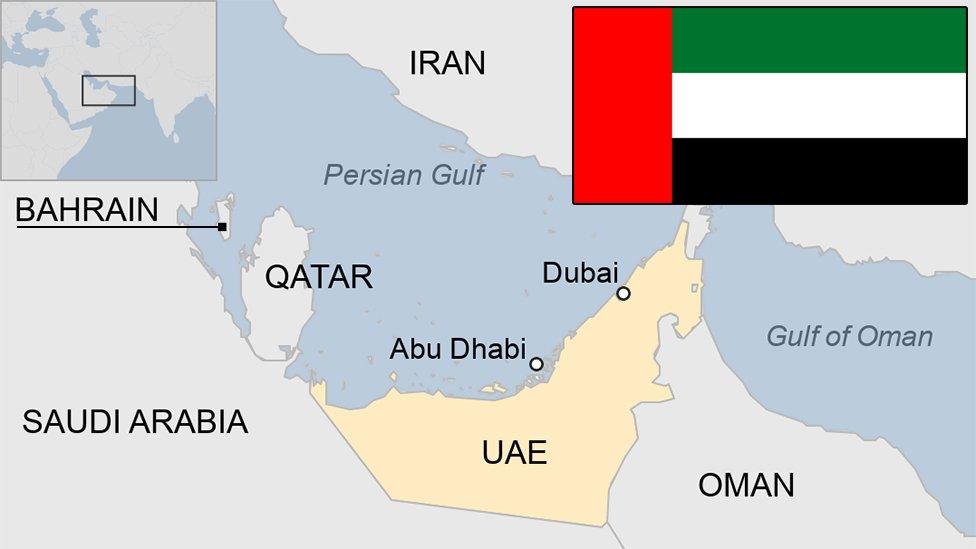
Nowhere is this transformation more vivid than in the United Arab Emirates. Once a quiet oil outpost, the federation is emerging as a global AI power, using its energy reserves to power massive data centers and entice U.S. tech firms with an openness previously unthinkable under American export restrictions.
As part of a newly minted partnership, OpenAI, Nvidia, Oracle, and Cisco have committed to building “Stargate UAE” — a $500 billion private-sector AI investment campus in Abu Dhabi, set to launch in 2026. The facility will initially host a 200-megawatt AI cluster, offering the Emirates access to Nvidia’s most advanced chips — and, by extension, the infrastructure needed to train state-of-the-art AI models.
Trump’s administration, in a sharp break from Biden-era export controls, is reportedly preparing to roll back restrictions on sharing advanced chips with allies, a move aimed at tightening American influence abroad while constraining Chinese access to critical technologies.
“This is a major inflection point,” said Mohammed Soliman, senior fellow at the Middle East Institute. “The U.S.-Gulf partnership is evolving. It’s no longer just about oil. It’s about compute.”
AI Ambitions Take Root in the Desert
Both Saudi Arabia and the U.A.E. have moved aggressively to establish homegrown AI capabilities. In Riyadh, the Saudi Public Investment Fund unveiled HUMAIN, a new state-owned company aimed at building out the full AI value chain — from large-scale Arabic-language models to hyperscale data infrastructure.
In Dubai, the AI firm CNTXT announced a breakthrough Arabic speech-to-text model called Munsit, capable of outperforming models from OpenAI and Meta, and designed to run on CPUs rather than power-hungry GPUs. “We trained Munsit on 15,000 hours of high-quality Arabic audio data,” said Shameed Sait, the firm’s AI director. “It’s the most accurate Arabic transcription model available today.”
The rise of locally trained, culturally grounded models is central to the region’s ambition: not only to consume U.S. tech but to become a net exporter of AI capabilities to the Global South — from Africa to South Asia.
Tech Diplomacy and the China Factor
The emerging AI alliance is also a calculated hedge against Beijing. Emirati firm G42 — once a partner to Chinese companies — has divested entirely from China, including its stake in TikTok-owner ByteDance, to ensure uninterrupted access to U.S. chips.
“Gulf countries are picking sides,” said Baghdad Gherras, a Dubai-based venture investor. “The UAE has made its bet: the U.S. makes the best chips and leads the AI ecosystem.”
Still, observers warn that China’s progress remains formidable. “They are catching up — crazy fast,” Gherras said.
A New Digital Order
At the core of the U.S.-Gulf realignment is a shared vision: to establish the Middle East not only as a consumer of AI but as a digital superpower capable of shaping global standards, particularly for developing economies.
“If these ambitions materialize,” Soliman said, “you’ll see the Gulf offering compute and AI services to the emerging world — in Swahili, in Hindi — hosting the models, the data, and the infrastructure.”
It’s a vision with far-reaching implications. Where once oil dictated alliances, compute is fast becoming the new currency of power.
And in the sand-swept skylines of Abu Dhabi and Riyadh, the future is no longer black and viscous — it’s silicon and code.


 AI News Monitor
Leave a comment