
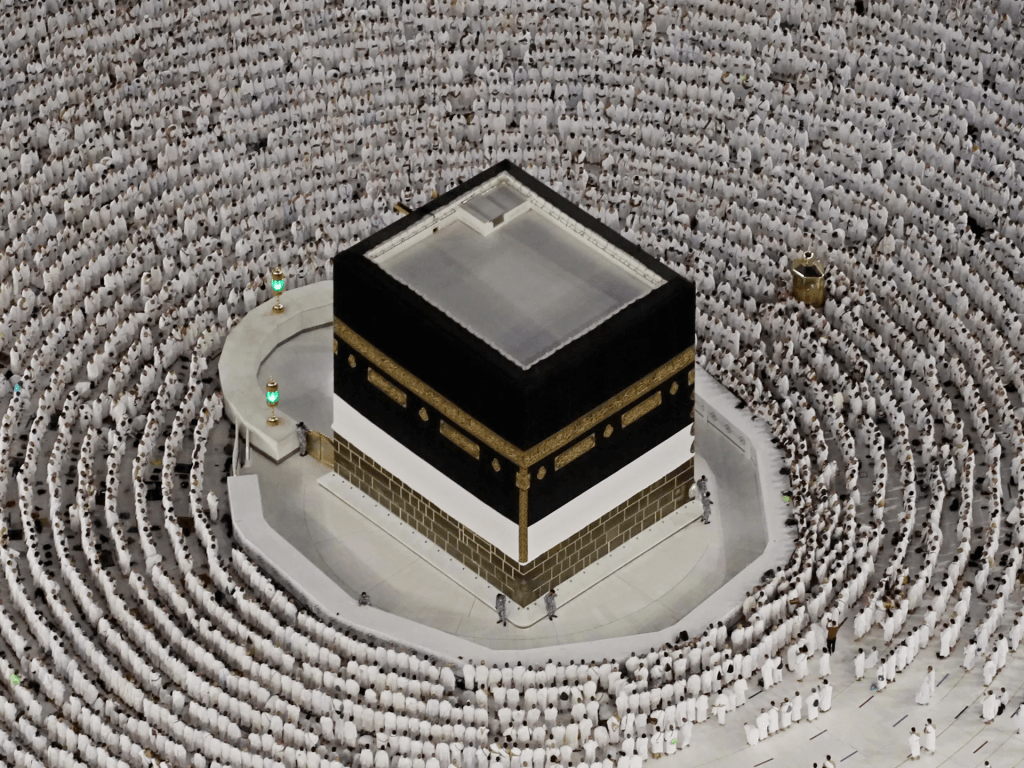
As nearly two million Muslim pilgrims converge on the holy cities of Makkah and Madinah for the annual Hajj pilgrimage, Saudi Arabia has introduced a suite of artificial intelligence-driven tools and smart technologies aimed at easing the spiritual and logistical challenges of the journey.
In a sweeping display of digital modernization, the kingdom’s authorities have unveiled several platforms designed to improve safety, efficiency, and spiritual enrichment for pilgrims arriving from around the world.
At the center of the initiative is Manarah 2, a multilingual AI-powered robot stationed at key locations across the pilgrimage sites. Capable of communicating in more than 20 languages, the robot provides real-time guidance and answers to religious and logistical inquiries.
Also rolled out are Nusuk cards, which serve as digital keys for pilgrims to book appointments at the Prophet’s Mosque, including visits to the revered Holy Rawdah. The cards also carry essential personal and accommodation data, streamlining identification processes and helping to reduce the number of lost or missing pilgrims.
To further ensure safe transit, the Makkah Bus Guidance Centre is operating in tandem with the Nusuk and Arshidni smart platforms. Together, they coordinate the flow of buses and help guide pilgrims to their accommodations across the sacred sites.
Health monitoring has also been digitized. The Tawakkalna mobile app, initially launched during the COVID-19 pandemic, now provides pilgrims with updates on their health status and access to nearby medical facilities.
Among the new tools is the Smart Enrichment Assistant, an application offering real-time information about prayer schedules, religious classes, and sermons in multiple languages. In addition, pilgrims can access a range of mobile apps dedicated to the recitation and study of the Quran, further enhancing their spiritual experience.
In a move to streamline international travel, Saudi Arabia’s Makkah Route Initiative expedites visa, customs, and health procedures in pilgrims’ countries of origin, allowing them to arrive in the kingdom with minimal delays. Meanwhile, a newly introduced luggage coding and sorting system ensures that baggage is efficiently delivered to pilgrims’ accommodations in either Makkah or Madinah.
According to Saudi officials, over 1.2 million pilgrims had arrived in the kingdom as of this week, ahead of the Hajj’s official start. The pilgrimage — one of the five pillars of Islam — is a religious obligation for Muslims who are physically and financially able to undertake it at least once in their lifetimes.
With the fusion of tradition and technology, Saudi Arabia appears poised to deliver one of the most logistically sophisticated Hajj seasons in recent memory.


 AI News Monitor
Leave a comment