
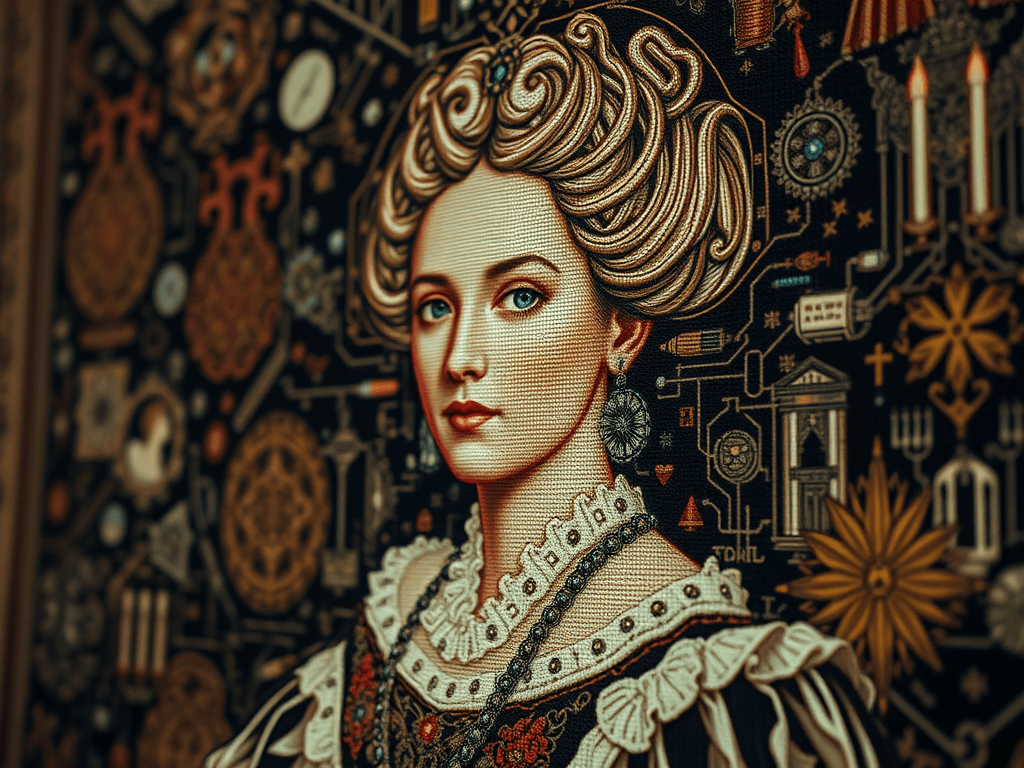
AI-generated art created by Elon Musk’s co-parent sells for thousands of dollars, but artists are furious.
Grimes, mother to three of Elon Musk’s children, has had her AI-designed artwork sold for $25,200. The tapestry artwork was sold in an art auction organized by Christie’s auction house in New York City.
The Canadian singer, whose real name is Claire Elise Boucher, created the artwork with her brother, Mac Boucher. It is titled Marie Antoinette After the Singularity. The singularity refers to a hypothetical future time when technological growth becomes uncontrollable and irreversible. Marie Antoinette is the infamous French queen who was executed during the French Revolution.
The AI-generated images were woven onto tapestries through a collaboration involving Grimes and her brother, art foundation, Factum Arte, and the Misalignment Museum. One was sold at Christie’s auction, in an event that had on display various art pieces created using AI. Christie’s is a British auction house with salesrooms in major cities all over the world. This was the company’s first ever auction of AI art. Both Grimes’ tapestries and the auction of AI-generated art have caused widespread controversy. This controversy has led to a petition signed by thousands of artists.
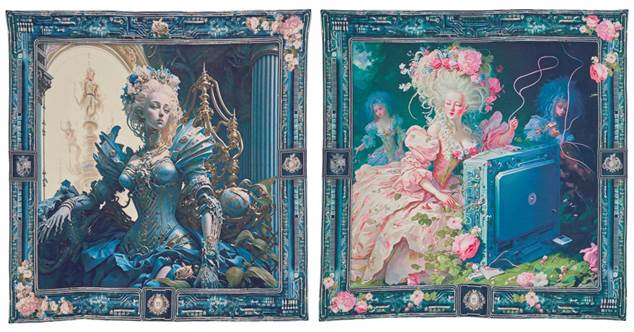
Grimes’s AI-generated art piece sold for $25,200 in Christie’s art auction in New York City. Image credit: Misalignment Museum on Instagram
Despite criticism, Grimes has long embraced AI technology for creative work. In 2023, she released an AI tool that could clone her voice so that anyone could record songs and make them sound like her. She then announced that fans could use the tool, GrimesAI-1, to simulate her voice and create new music. She promised to split the royalties with them. According to her brother, Mac, the Canadian singer has also been making music videos with special effects and AI, instead of taking expensive trips around the world.
The Misalignment Museum, which collaborated with Grimes, describes itself as “a place to learn about Artificial Intelligence and reflect on the possibilities of technology through thought-provoking art pieces and events.” In an Instagram post, Grimes said that their partnership was based on a shared desire for “a constructive way to implement AI art that supported human artists and preserved craft.”
However, the post sparked an online debate, with some critics calling the tapestry AI slop and Grimes’s comment empty. Furious artists went further by sending an open letter to Christie’s, expressing their outrage over the AI-generated art. According to them, there is enough evidence that AI models steal bits of work from various human artists to create new but unoriginal pieces.
“Your support of these models, and the people who use them, rewards and further incentivizes AI companies’ mass theft of human artists’ work,” said the letter, which had 6,500 signatures.




 AI News Monitor
Leave a comment